James Tasamba
31 July 2026•Update: 31 July 2026
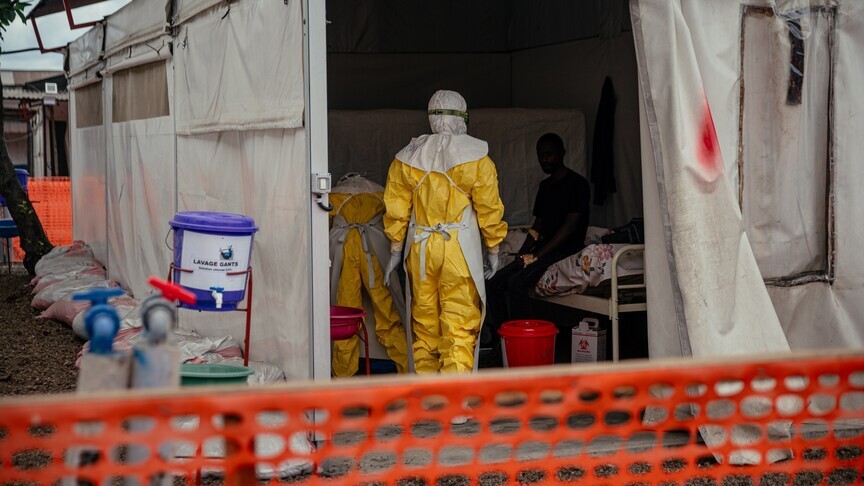
More than 3,530 people have been infected with Ebola virus in the Democratic Republic of Congo since the outbreak was declared in mid-May, authorities said Friday, making it the world's second-largest Ebola outbreak by recorded infections, as health officials struggle to contain the epidemic.
Confirmed cases have reached 3,532, surpassing the roughly 3,470 cases recorded during the 10th outbreak in the country between August 2018 and June 2020.
A total of 1,556 people have died from the virus, bringing the case fatality rate to 44.1%, Health Ministry data showed.
Some 807 patients remain in isolation or hospital, while 626 have recovered.
Only the West African outbreak, which swept across Guinea, Liberia and Sierra Leone between 2014 and 2016, recorded more infections, with 28,616 cases and 11,310 deaths, according to the World Health Organization.
The virus has affected five provinces: Haut-Uele, Ituri, North Kivu, South Kivu, and Tshopo.
Ituri remains the epicenter of the epidemic caused by the Bundibugyo virus strain, with sustained transmission.
To date, no vaccine or specific treatment has been approved for the Bundibugyo virus.
The Coalition for Epidemic Preparedness Innovations (CEPI) announced Thursday a partnership with Singapore-based Hilleman Laboratories to accelerate the development and manufacture of a vaccine candidate against the current Ebola strain for clinical trials.
The project will receive up to $8.5 million from CEPI to advance development and manufacture clinical supplies of the investigational vaccine at the organization’s vaccine production facility, according to a statement.
The vaccine candidate is based on the recombinant vesicular stomatitis virus (rVSV) platform, which is already used in the approved vaccine against the Zaire strain of Ebola.
“With Bundibugyo virus cases rising at worrying speed, the epidemic is fast becoming a humanitarian crisis,” said Richard Hatchett, CEPI'S chief executive.