Anadolu Ajansı © 2026


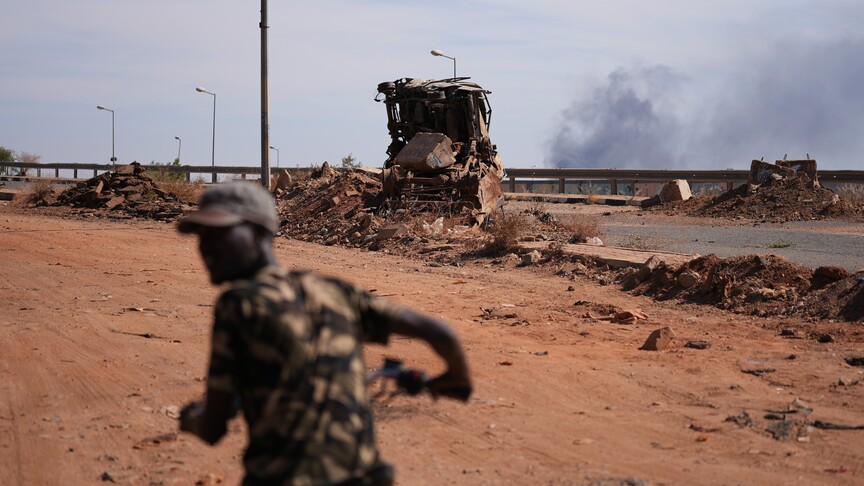
Sudan’s most active battlefronts stretch across a vast arc from the Blue Nile state near the Ethiopian border in the east, through three Kordofan states, to Darfur in the west.
Al-Baraka, Bakori, Geissan and Kurmuk in the Blue Nile; Bara, Al-Abbasiya and Kauda in Kordofan; and Um Baru, Kernoi and Abu Suruj in Darfur have emerged as some of the most significant centers of fighting and military movement.
Control of the areas is divided among the army, the paramilitary Rapid Support Forces (RSF) and armed groups allied with each side. Drone attacks have increasingly carried the war into towns and villages far from traditional front lines.
Anadolu reviewed the main hotspots, their military significance and the current balance of control.
Al-Baraka, in the Kurmuk locality in the southeastern Blue Nile state, has become one of the newest fronts between the army on one side and the RSF and its ally, the Sudan People’s Liberation Movement-North (SPLM-N), on the other.
The area lies on the outskirts of Kurmuk near the Ethiopian border, giving it strategic importance for movements between border zones and the interior of Blue Nile.
On Friday, the army said it repelled an attack by the RSF and SPLM-N on Al-Baraka.
The army’s 4th Infantry Division said forces inflicted personnel and equipment losses on the attackers and forced them to retreat toward the Sudan-Ethiopia border.
Bakori, in the Geissan locality, is another key hotspot in Blue Nile.
The area hosts a military base and the headquarters of the army’s 14th Brigade, making it a contested position for both sides.
Bakori lies 170 kilometers (106 miles) southeast of Damazin, the state capital.
In recent weeks, the RSF and SPLM-N have taken control of Geissan and Kurmuk, the administrative centers of the two localities bearing the same names.
The army, however, continues to hold other parts of both localities, as well as Damazin, Er Roseires and the localities of Bau, Wad al-Mahi and Tadamon.
Beyond Kurmuk and Geissan, the SPLM-N, led by Abdelaziz al-Hilu, has controlled Yabus since 2011.
The area, one of the movement’s main strongholds in Blue Nile, lies near the borders with Ethiopia and South Sudan, around 80 kilometers from Kurmuk.
The SPLM-N has fought the Sudanese government since 2011, demanding greater autonomy in Blue Nile and South Kordofan before joining forces with the RSF during the current war.
In North Kordofan, Bara remains one of the most strategically important towns because of its location on the national highway linking it to Omdurman, west of the national capital, Khartoum.
In late July, the army retook Bara, Jabra al-Sheikh and Um Sayala, allowing it to secure the highway and reshape the military balance in the state bordering Darfur and West Kordofan.
Fighting around Bara has since shifted largely from direct ground clashes to drone attacks on military positions and villages surrounding the town.
Villages west of Bara that contain no military deployments have also come under RSF attacks, according to the Emergency Lawyers and the Sudan Doctors Network.
Other military movements are concentrated in northwestern North Kordofan, where the RSF controls Hamrat al-Sheikh, Al-Mazroub and Sodari.
Their importance stems from their proximity to Darfur and West Kordofan, and their location along movement and supply routes connecting the two regions.
North Kordofan has also faced repeated drone attacks, alongside similar strikes in South and West Kordofan.
In South Kordofan, Kadugli and Dilling remain among the most important army-held positions.
The army broke the siege on both cities months ago, and strengthened its control in large parts of the state, except for areas still held by the SPLM-N under al-Hilu.
Although major ground fighting around the two cities has subsided, both continue to face intermittent drone attacks that have killed and wounded civilians.
The Al-Abbasiya locality has become another hotspot in South Kordofan amid repeated attacks and deteriorating security conditions.
On Thursday, the International Organization for Migration (IOM) said 6,420 people had been displaced from nine villages in Al-Abbasiya because of worsening insecurity from Sept. 1 to 2.
Kauda, in the far south of South Kordofan, remains under SPLM-N control and is one of the movement’s most important strongholds.
Alongside its role in the broader conflict between the SPLM-N and the government, Kauda has also witnessed local fighting between SPLM-N forces and members of the Otoro tribe because of a land dispute.
The clashes began in late June after a dispute about border demarcation between the Shawaya and Otoro tribes escalated into armed conflict, killing dozens and displacing thousands.
North Darfur remains one of the most active fronts in the Darfur region, with the army and the Joint Force of Armed Movements conducting operations against the RSF.
The Joint Force includes armed groups such as the Sudan Liberation Movement, led by Minni Arko Minnawi, and the Justice and Equality Movement, led by Jibril Ibrahim.
Um Baru and Karnoi have emerged as key hotspots after the army and Joint Force gained control of large parts of both localities.
Their proximity to the Chadian border makes them important bases for advancing into other parts of North Darfur and securing supply routes in the state.
In West Darfur, army and Joint Force movements have been concentrated north of El Geneina, the state capital.
In June, the forces captured Kulbus, about 160 kilometers north of El Geneina, before withdrawing more than two weeks later and repositioning around the town.
The army and the Joint Force later took Bir Saliba and Jebel Moon north of El Geneina as part of efforts to expand their foothold in the state.
On Aug. 29, West Darfur Gov. Bahr al-Din Adam Karama said the army and the Joint Force had taken control of Abu Suruj in the Sirba locality following clashes with the RSF.
Abu Suruj is among the latest areas where territorial control has shifted in West Darfur as military movements continue north of El Geneina.
The RSF and allied forces still control most of Darfur, while the army and the Joint Force maintain positions in parts of the region’s north and west.
Despite the different strategic value of each front, displacement remains the most consistent consequence of the widening conflict.
In Blue Nile, the IOM said 3,000 people had been displaced from three villages in the Kurmuk locality, while the UN estimated that 22,000 people fled fighting in Geissan in one week.
In South Kordofan, 6,420 people were displaced from villages in Al-Abbasiya, in addition to thousands forced from their homes by the conflict in Kauda.
The growing use of drones has also expanded the threat well beyond frontline areas. The UN said 1,100 civilians were killed in drone attacks between January and June.
The army and RSF have been at war since April 2023 because of disputes surrounding the political transition and plans to integrate the paramilitary force into the regular military.
As front lines continue to shift between Blue Nile, Kordofan and Darfur, Sudan’s map of military hotspots remains fluid, with no clear prospect of an end to the war.
news_share_descriptionsubscription_contact