Jorge Antonio Rocha
14 July 2026•Update: 14 July 2026
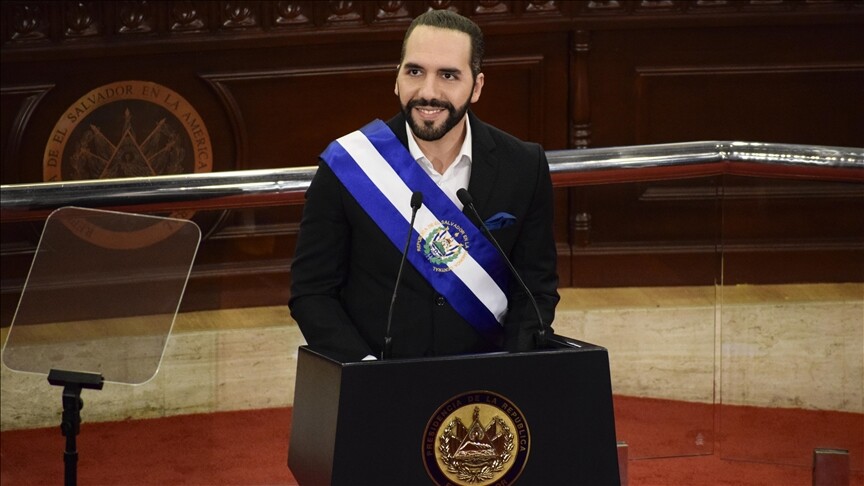
El Salvador's ruling party announced on Monday that incumbent President Nayib Bukele has won the country's primary elections, making him the presidential candidate for the 2027 general elections, where he will seek a third consecutive term.
Bukele, who once described himself as the "world's coolest dictator," has already spent seven years in office, a period marked by allegations of serious human rights violations, persecution of political dissidents, and the undermining of democratic institutions through constitutional reforms.
Through social media, the ruling Nuevas Ideas party announced Bukele's victory following its internal elections.
The controversial outcome was made possible after the ruling party enacted a constitutional reform in 2025 allowing indefinite presidential reelection, a move critics and political opponents described as a power grab.
90% approval ratings
Bukele enjoys overwhelming support among Salvadorans, with local polls reporting approval ratings of around 90%.
Bukele's broad support stems primarily from his hardline security policy and the war he declared against the gangs that controlled large swaths of the country for decades, a situation that turned the small Central American nation into one of the world's most dangerous countries, recording as many as 53.1 homicides per 100,000 inhabitants in 2018, the year before Bukele took office.
According to official Salvadoran data, homicides in El Salvador have fallen by 98% under Bukele's administration, reaching 1.9 homicides per 100,000 inhabitants in 2024.
However, security in El Salvador has been achieved through a state of emergency declared by Bukele in 2022, which has been extended indefinitely and remains in effect.
State of emergency suspends constitutional guarantees
The state of emergency has suspended constitutional guarantees in the country and, together with the construction of massive prisons ordered by Bukele, has resulted in the imprisonment of more than 118,000 people, many of them detained without trial or evidence supporting their alleged criminal ties or activities.
Authorities have also faced serious allegations of human rights violations, including enforced disappearances, extrajudicial executions, torture, and sexual violence.
Bukele's government enjoys the support of US President Donald Trump, who has relied on the Central American leader to expand his regional security and migration policies, including an agreement to accept migrants deported from the US.
In 2025, the US sent 252 Venezuelans to El Salvador, where they were arrested by Salvadoran authorities and imprisoned in the country's mega-prisons.
According to a report published by Human Rights Watch and Cristosal, the deportees were tortured and subjected to abuse, including cases of sexual violence.
Bukele must officially register his candidacy with the Supreme Electoral Tribunal between Oct. 1 and Nov. 19 of this year. The general elections are scheduled for Feb. 28, 2027.