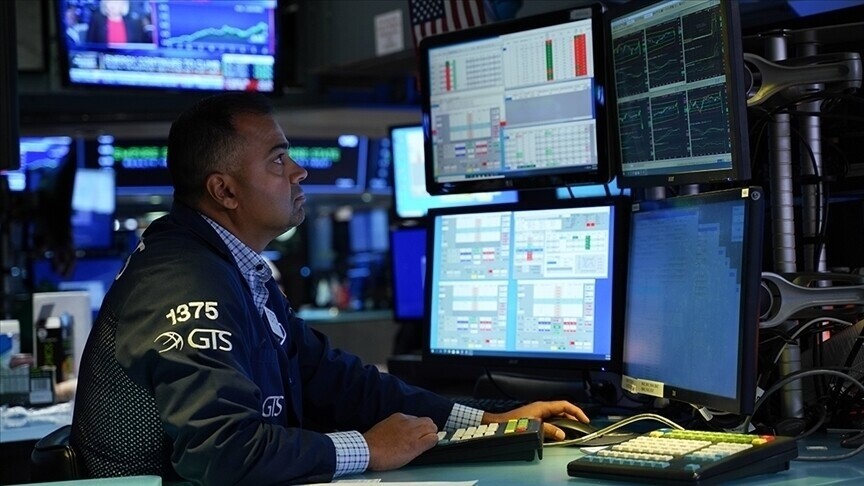
Global markets are trading mixed amid overvaluation concerns in the semiconductor sector and economic data in Asia, despite the optimism that a new deal could be reached in the Middle East.
The geopolitical tensions between the US and Iran that flared last week somewhat eased at the start of the new week.
US President Donald Trump said negotiations with Tehran would resume on Monday and that he was optimistic about reaching an agreement on reopening the Strait of Hormuz and Iran’s nuclear disarmament.
Geopolitical risk perception somewhat eased, while oil prices declined. Global bond yields and the lack of positive signals from Asian economic data continue to dampen risk appetite.
China’s recent advancements in the advanced chipmaking and artificial intelligence (AI) sectors heightened concerns over profitability and growth in the semiconductor business.
Meanwhile, the US’ Personal Consumption Expenditures price index declined from 4.1% to 3.7% in June, easing the likelihood of multiple Fed rate hikes.
Markets expect at least a single rate hike by the end of the year, while the probability of such a monetary policy decision is priced in at 67% for September and 96% for October.
Signals from US nonfarm payrolls to be released this week could shape Fed expectations.
At the same time, foreign exchange market developments came to the fore as US Treasury Secretary Scott Bessent confirmed intervention in the Japanese yen.
Bessent said the interventions carried out on July 31 curbed irregular movements in the currency and additional joint market interventions could be employed if need arises.
The sharp depreciation of the Japanese yen threatens the global financial system and could disrupt capital flows and fuel volatility in financial markets, analysts say.
Meanwhile, bond yields saw a limited pushback as the US 30-Year Treasury yield started the week at 5.24%, down around four basis points on Monday, despite hitting its highest in 19 years last week.
The US 10-Year Treasury yield began at 4.7%, down five basis points, on Monday.
The US Dollar Index fell to the 99 level last week for the first time since June 17, as expectations that the Fed would not take anticipated hawkish steps came to the fore. The US dollar started Monday at 99.7.
Gold climbed 0.6% to $4,070 per ounce with easing geopolitical tensions and the diminishing likelihood of rate hikes, while the price of October-delivery Brent crude fell 5.1% to $83.4 a barrel.
All eyes turned to the financial results of corporations, especially SpaceX’s on Tuesday, as it recently went public and its shares suffered sharp losses after it reached a record market cap.
American indexes started the new week on a positive note.
The partial easing of geopolitical in the Middle East and hopes for a new deal played a key role in shaping European markets.
Indexes started the week positive in the region, while all eyes turned to the producer inflation and sector-specific Purchasing Managers’ Index (PMI) data to be released this week.
The decline in oil prices is key for the European economies dependent on imported energy, so the drop in energy costs could change inflation and growth expectations, analysts say.
The European Central Bank’s likelihood to hike its policy rates in September reached 87%, according to money market estimates.
Meanwhile, the number of undocumented migrants passing away while attempting to cross into the North African Spanish city of Ceuta, bordering Morocco, rose to 88.
Some 73,500 undocumented migrants have been estimated to have returned from Ceuta to Morocco since July 30.
At the same time, overvaluation concerns in the global semiconductor sector continued in the new week, overshadowing the optimism in Asian stock markets.
Japan’s final manufacturing PMI reached 54.5 in June, marking a slight decline from the previous month but still maintaining strong momentum, indicating that economic activity remained strong and price pressures could persist.
The development in the index fueled concerns that the Bank of Japan might further tighten its monetary policy.
China’s manufacturing PMI fell short of expectations at 50.9, fueling concerns over the country’s economic growth.
The selloff in AI-related tech stocks carried over into the new week with a sharp decline in the South Korean stock market.
AI memory chipmaker SK Hynix’s shares fell 8%, while tech giant Samsung Electronics’ shares dropped 8.4%.
Near Monday’s close, Japan’s Nikkei 225 declined 1.2%, South Korea’s Kospi fell 5.4%, and China’s Shanghai Composite dropped 0.7%, while Hong Kong’s Hang Seng traded flat.