Handan Kazanci
01 June 2026•Update: 01 June 2026
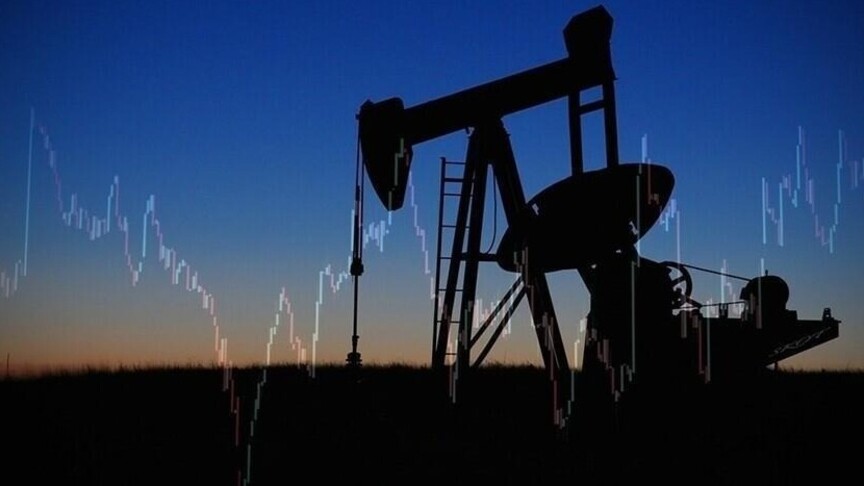
Oil prices rose on Monday as renewed tensions in the Middle East heightened concerns over potential supply disruptions.
International benchmark Brent crude traded at $93.89 per barrel at 10.10 a.m. local time (0710 GMT), up around 2.9% from the previous close of $91.12.
US benchmark West Texas Intermediate (WTI) increased about 3.4% to $90.19 per barrel, compared with $87.3 in the previous session.
The gains came after the US and Iran exchanged attacks over the weekend, fueling fears that the conflict could spill over into key energy-producing and shipping regions.
The US conducted "self-defense strikes" over the weekend against Iranian radar and drone command-and-control facilities in Goruk, Iran, and on Qeshm Island, the United States Central Command (CENTCOM) said late Sunday.
"The measured and deliberate strikes occurred on Saturday and Sunday in response to aggressive Iranian actions that included the shootdown of a U.S. MQ-1 drone that was operating over international waters," CENTCOM said in a statement.
According to the command, US fighter aircraft responded "swiftly" following the incident, targeting and destroying Iranian air defense systems, a ground control station, and two one-way attack drones that were assessed as posing "clear threats" to ships transiting regional waters.
The command stated that it remains committed to protecting US assets and interests throughout the region "in response to unwarranted Iranian aggression during the ongoing ceasefire."
Iran's Islamic Revolutionary Guard Corps (IRGC) said early Monday that it struck a US air base allegedly used to launch an attack on a telecommunications tower on Sirik Island in southern Hormozgan province, according to Iran's Mehr News Agency.
In a statement cited by Mehr, the IRGC said its Aerospace Force targeted and destroyed the base from which US forces had launched the operation against the communications facility.
The IRGC said the strike was carried out hours after the reported US attack and claimed that all predetermined targets were successfully hit.
The force also warned that any further attacks would trigger a response "different in scale and nature," adding that responsibility for any escalation would rest with the United States.
Investors also kept a close eye on developments in Lebanon, where fighting between Israeli forces and Hezbollah continued despite a ceasefire agreement.
The Israeli army said Monday that one soldier was killed and three others were wounded in southern Lebanon amid ongoing fighting with Hezbollah and continued Israeli ceasefire violations.
One of the wounded soldiers was in serious condition, while the other two sustained minor injuries, the army said in a statement, adding that all were transferred to a hospital for treatment.
According to The Times of Israel, the casualties resulted from an overnight drone strike carried out by Hezbollah.
The latest escalation has added to concerns that instability across the region could threaten oil supplies, particularly as markets remain sensitive to developments around major production and transit routes.
Meanwhile, US President Donald Trump said early Monday that Iran is seeking an agreement with the US and expressed confidence that ongoing negotiations would produce a favorable outcome.
Writing on his Truth Social platform, Trump said Tehran "really wants to make a deal" and described a potential agreement as one that would be "good for the U.S.A. and those that are with us."
Analysts said concerns over supply security in the Middle East continued to outweigh bearish signals from China, where recent economic indicators pointed to softer demand growth.
By Handan Kazanci