Anadolu Ajansı © 2026


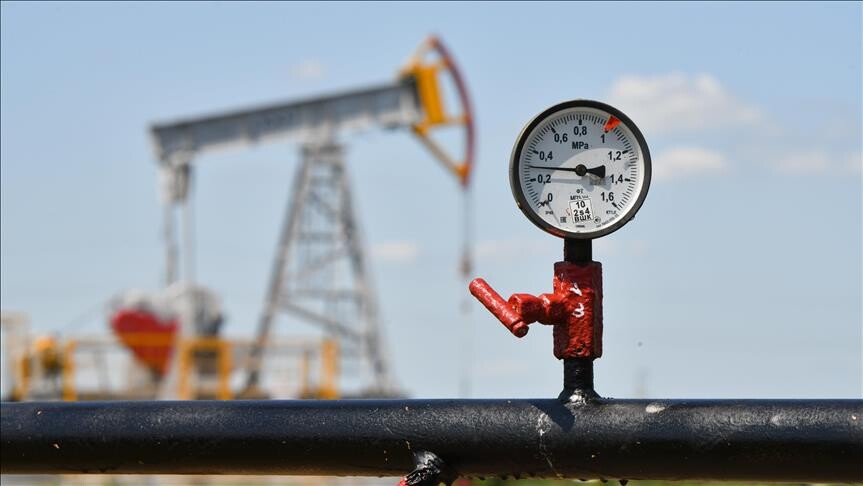
The UAE’s decision to withdraw from OPEC and OPEC+ gives Abu Dhabi greater control over its oil production policy and could increase pressure on the producer alliance over time.
However, its immediate impact on commodity markets is likely to be limited, as the ongoing war involving Iran and disruptions around the Strait of Hormuz continue to dominate supply concerns, experts said.
The UAE’s move marks a significant shift for one of OPEC’s most important Gulf producers, which has invested heavily in expanding its production capacity in recent years and has repeatedly sought more room to raise output.
Carole Nakhle, CEO of Crystol Energy, said the decision had been “building for some time,” driven by Abu Dhabi’s discomfort with output constraints and uneven compliance among members of the producer group.
“The UAE has invested heavily in expanding its production capacity and has been increasingly uncomfortable with output constraints, particularly amid uneven compliance across the group,” Nakhle told Anadolu.
She said the broader geopolitical context also played a role, reinforcing the view that the UAE’s strategic priorities may now be better served outside the OPEC+ framework.
For commodity markets, Nakhle said the immediate effect of the withdrawal may be contained, as oil prices are currently being driven mainly by the war involving Iran and associated supply risks.
“In the near term, commodity markets — especially oil — remain driven primarily by the war involving Iran and associated supply risks,” she said. “In that sense, the timing of the UAE’s exit may limit any immediate market impact.”
However, she said the move remains important for OPEC, even though the organization has dealt with membership changes in the past.
“The challenge is that internal tensions are becoming more pronounced,” Nakhle said.
Li-Chen Sim, an associate fellow at the US Middle East Institute, said the UAE’s decision is more likely to matter for oil markets over the longer term rather than immediately.
She said Abu Dhabi’s ability to raise production and exports in the short term will be limited by the current blockade of the Strait of Hormuz, the time and investment needed to increase output from existing fields or develop new ones, and the need to repair damage to oil assets from the conflict.
“For oil markets, the more significant impact will be in the longer term,” Sim told Anadolu.
She said the move would be positive for oil markets over time because the UAE would have more flexibility over output, which would likely mean higher oil supply.
“The UAE, which had targeted increasing its oil production to 5 million barrels per day by 2027, will likely increase its production levels beyond this level by 2030,” she said.
Experts said the decision also strengthens the UAE’s strategic autonomy by allowing it to align oil output more closely with its capacity expansion plans.
Nakhle said the UAE gains “greater flexibility over its production policy” and can better align output with its investment in capacity expansion.
“This gives it more strategic autonomy and the option to monetize its capacity more fully, depending on market conditions,” she said.
Sim said the move carries “a lot of economic and political upside” for Abu Dhabi, as it fits with the country’s broader oil development priorities.
She noted that before the withdrawal decision, the UAE had already made progress in localizing key parts of its oil industry, trading its own crude instead of relying on third-party traders, and expanding its own fleet of oil vessels.
“So this move to increase autonomy in oil production is in line with such achievements,” Sim said.
She added that the decision also sends a message to investors, some of whom have voiced concern about the impact of the Iran war on the UAE, that the country remains an attractive destination for current and new investment.
According to Sim, the UAE is likely to seek partners for co-investment in bypass infrastructure as well as new or upgraded road, rail and pipeline capacity.
Another impact, she said, could be the scaling up of renewable power projects to free up more oil and gas for export.
Politically, Sim said the decision brings the UAE closer to the US, noting that Washington has repeatedly criticized OPEC’s influence.
However, she said the main downside is also political, as regional peers are unlikely to welcome the move.
“It serves to emphasize the UAE’s recent frustration with Arab peers,” she said.
The UAE’s exit could also lead some producers to reassess their own position within OPEC or OPEC+, experts said, particularly those unhappy with quota limits or compliance disputes.
Nakhle said the decision could prompt some members to reconsider their position, but a broader wave of exits is not certain.
“Few countries have the same combination of financial strength, spare capacity and strategic flexibility as the UAE, so any broader exodus is not a given,” she said.
Sim said countries such as Venezuela and Kazakhstan could be next in line to consider leaving OPEC or OPEC+.
She said such a scenario would raise questions over Russia’s position in the wider OPEC+ alliance, especially over whether Moscow would prioritize its relations with Saudi Arabia or the UAE.
Russia, she said, would have to consider whether to remain in OPEC+ and signal the prioritization of its relationship with Saudi Arabia, or withdraw from the alliance.
Russia said Wednesday that UAE's withdrawal from OPEC and OPEC+ is a “sovereign decision.”
Yesar Al-Maleki, Gulf analyst at MEES and senior nonresident fellow at the Atlantic Council, said in the past, the UAE was frustrated by OPEC quotas and the resulting inability to fully utilize its production capacity.
The decision is not surprising, he told Anadolu, adding that it appears that some consideration was given to timing of the OPEC impact on the market.
"Given the closure of the Strait of Hormuz, the UAE currently can't fully export its oil and this should limit the immediate impact from the decision on market balances and prices," he said.
This also gives OPEC time to recalibrate policy following the UAE's exit, he added.
There is also a scenario where long-term demand growth is reshaped by this conflict, with consumers opting to reduce their exposure to oil and seek alternatives to improve their energy security, he underlined.
"The UAE's decision allows it to maximize production, recouping investment on infrastructure, before demand growth begins to slow down," he said.
UAE’s exit reduces the market share and spare capacity of OPEC and the broader OPEC+ alliance, but it is too early to say what policy measures may be adopted to compensate.
UAE was one of the few producers in the group with ample spare capacity, he said, adding that OPEC has been encouraging members to invest in expanding oil production capacity.
"It launched a new auditing mechanism this year, allowing larger quotas to those who can increase capacity. These efforts could help in the long term."
news_share_descriptionsubscription_contact