Zeynep Duyar, Mertkan Oruç
29 April 2026•Update: 29 April 2026
Türkiye is accelerating its national space programs with projects such as a new communications satellite, the ongoing construction of a spaceport in Somalia, and plans for a lunar mission in 2027, senior officials from the Turkish Space Agency (TUA), Turksat, and defense firms said Wednesday.
The updates came during the INSECSPACE 26 conference in Ankara.
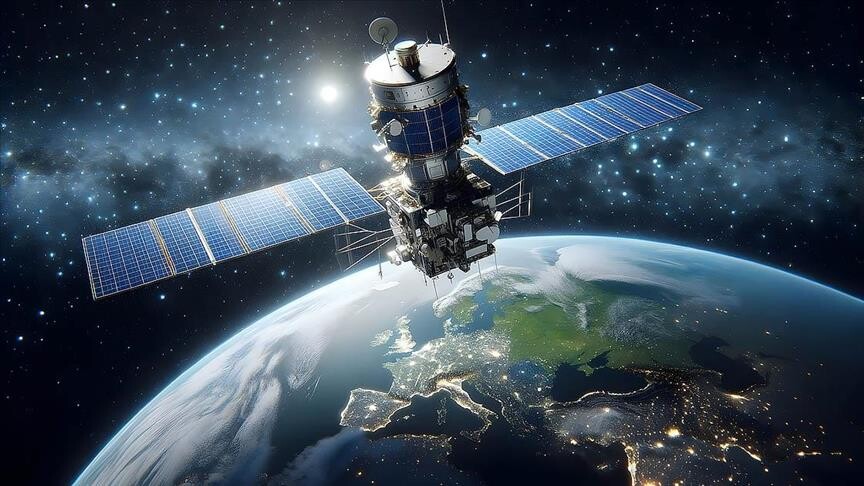
Turksat CEO Ahmet Hamdi Atalay said the country’s next-generation communications satellite Turksat 7A has nearly completed its design phase, with production expected to begin soon as Türkiye’s domestic satellite sector continues to expand under a national push for technological independence.
Atalay also said Turksat signed cooperation agreements with two Chinese satellite companies, while noting that some Western countries are increasingly distancing themselves from Beijing in the aerospace sector as Türkiye maintains cooperation with multiple partners.
He added that concerns are growing over the management of space debris, noting that more than 14,500 satellites are actively operating in orbit along with thousands of inactive satellites.
TUA Chair Yusuf Kirac said Türkiye’s lunar mission is currently targeted for June 2027. The mission will involve a SpaceX launch vehicle to reach Earth orbit, followed by an orbital transfer toward the Moon using a domestically developed hybrid propulsion system produced by Turkish firm DeltaV.
Kirac also said Türkiye is constructing its own spaceport in Somalia to ensure long-term and independent access to space, noting that Somalia’s equatorial location provides geographic and payload advantages for rocket launches.
He said the Somali facility has already attracted global commercial interest and underlined the importance of countries maintaining independent access to space through national launch infrastructure.
Türkiye will host the International Astronautical Congress (IAC) later this year in Antalya. Kirac said the event has already received a record 8,300 academic and technical paper submissions, including more than 1,800 from within the country — compared with roughly 60 to 70 submissions Türkiye typically made in previous years.
Ali Yazici, chair of the INSECSPACE 26 event, said global conflicts and cyber warfare are making satellites increasingly critical yet vulnerable assets for national defense, logistics, and secure communications.
He said supply chain disruptions, space debris risks, signal jamming, and data security concerns affect the performance, reliability, resilience, and sustainability of space infrastructure and called for cross-sector cooperation to strengthen Türkiye’s space ecosystem.
*Writing by Emir Yildirim in Istanbul