Mucahithan Avcioglu
17 June 2026•Update: 17 June 2026
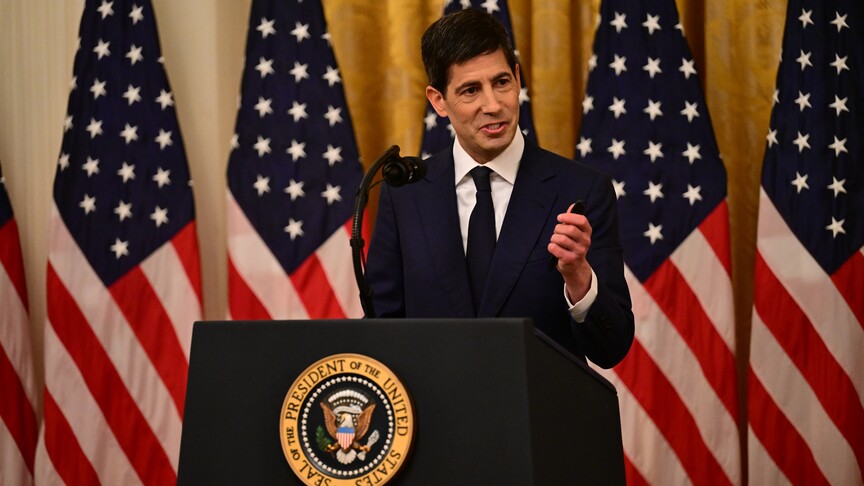
Federal Reserve Chair Kevin Warsh said on Wednesday the US central bank has the “capability and commitment” to deliver on its 2% price stability objective, as he held his first press conference as chair following the Federal Open Market Committee’s latest policy meeting.
“First, we have the capability and commitment to deliver on our price stability objective of 2%. That's what we're going to do,” Warsh said, stressing that the Fed remains focused on bringing inflation back to its long-held target.
The Fed unanimously decided to maintain the target range for the federal funds rate at 3.5%-3.75%, in support of its dual mandate of price stability and maximum employment.
Warsh said economic activity in the US is expanding at a solid pace despite elevated uncertainty, partly stemming from the conflict in the Middle East, while productivity growth and capital investment remain strong.
Job gains have kept pace with the workforce, and the unemployment rate has changed little, he added.
He acknowledged that inflation has been running well above the Fed’s 2% target for more than five years, saying persistently high prices are a burden for the American people.
“This committee will deliver price stability,” Warsh said, adding that FOMC members are “unambiguous and unanimous” on that objective.
Asked whether the Fed could reconsider its 2% inflation target, Warsh said the level remains the central bank’s long-held objective and should not be revisited before the Fed reestablishes its ability to deliver on it.
The Fed’s latest projections showed the median forecast for the federal funds rate at 3.8% by the end of 2026, above the current target range. Warsh confirmed that he did not submit a projection for the Fed’s “dot plot,” saying he refrained from offering projections because of his long-held views on the Summary of Economic Projections in its current form.
The Fed also removed forward guidance from its policy statement, with Warsh saying such guidance was not suited to the current policy environment.
He said the latest statement was “shorter” and “simpler,” adding that it aimed to provide the facts as judged by policymakers rather than signal a future policy path.
Warsh also announced the creation of five task forces covering communications, the balance sheet, data sources, productivity and jobs, and inflation frameworks.
The task forces will review current practices, examine alternatives and propose next steps for policymakers, he said.
Asked why the Fed did not tighten policy despite its emphasis on credibility and price stability, Warsh said: “That judgment you expressed was not expressed by any of the 19 people around the table.”
He added that the issue would be taken up again when officials meet in six weeks.