Aysu Biçer
24 August 2026•Update: 24 August 2026
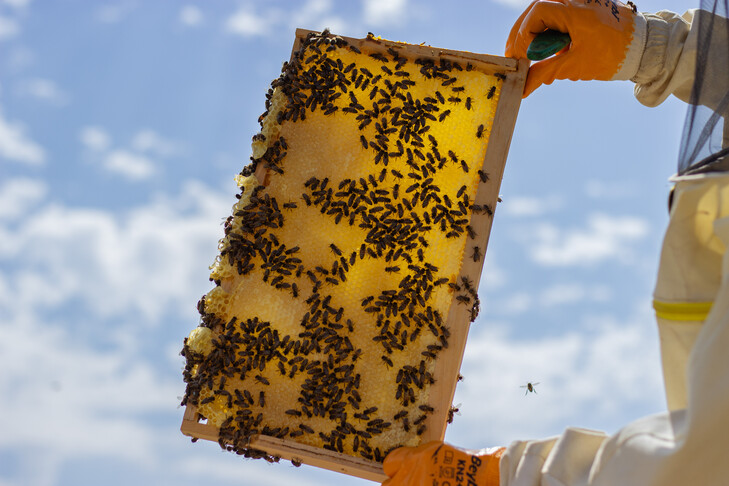
Melting glaciers could increase the risk of disease spreading between wild bees and honeybees, according to a new study led by researchers at the University of Lausanne in Switzerland.
Scientists from the Universities of Lausanne and Milan and Italy’s Crea research organization studied bee populations around the Mont-Mine Glacier in the Val d’Herens. They investigated three viruses and two parasites, according to a report from SWI on Monday.
Normally, wild bees and honeybees tend to forage on different plant species. This natural separation reduces the chances of bees picking up pathogens from one another.
But as glaciers retreat, changing vegetation is bringing the insects together to feed on the same plants. Flowers can become sites of infection when infected bees leave pathogens behind that are then picked up by other bees.
Researchers found all five pathogens in honeybees in areas that had only recently become ice-free. Only two were detected in wild bees in those areas.
In older ice-free zones, where vegetation changed more significantly, the wing-deforming virus became much more common among wild bees.
The study highlights a less visible consequence of climate change, showing how glacier retreat can alter relationships between species as well as landscapes.