Zeynep Ozturhan
02 October 2026•Update: 02 October 2026
Quality climate education is "probably the most transformative climate adaptation action," according to an expert, who said the UN climate conference COP31, which will be held in Antalya, Türkiye, in November, offers a significant opportunity to bring climate education to the center of the global climate agenda.
Youth and Education is one of the 10 priority areas of the COP31 Action Agenda.
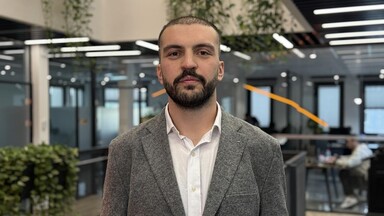
Eric Guilyardi, a climate scientist at CNRS-IPSL -- a research federation that groups nine laboratories focused on Earth sciences and climate -- and president of the Office for Climate Education (OCE), spoke to Anadolu about how education can drive climate action.
A lead author on the Intergovernmental Panel on Climate Change (IPCC) Fifth Assessment Report, Guilyardi said climate education is not just about transferring scientific knowledge but about equipping young people with the tools they need to think about what kind of world they want to live in.
"There are many reasons why we need young people worldwide to better understand what climate is, how it works, how we are modifying it through our human activities, and what course of action we can think of to limit the changes we are doing and their impact on societies and ecosystems," Guilyardi said.
Noting that climate education is interdisciplinary by nature, spanning from climate science to the humanities, sports and history, Guilyardi said the subject can "fall through the cracks" depending on how an education system is structured.
Quality climate education is 'most transformative' adaptation action
Underlining that teachers are at the heart of climate education, Guilyardi said quality climate education is "probably the most transformative climate adaptation action."
He noted that education systems and teachers must be equipped with both the science and the associated pedagogy, adding that this was the reason OCE was created to bring together climate scientists and educators.
Emphasizing the importance of adapting content to local realities, cultures and education systems, Guilyardi said: “This is absolutely key. The one-size-fits-all approach doesn't work in this field.”
30 to 80 hours of training needed to change teachers' practice
Noting that many teachers feel "a bit lonely" on climate topics they do not fully master, Guilyardi said changing their professional practice requires between 30 and 80 hours of training.
"This education is very different from just awareness. You're not going to have a two-hour conference and that's it. It's not enough to change your professional practice in the classroom," he said.
Guilyardi announced that the fifth edition of the "Teachers' COP" -- a global platform OCE established five years ago -- will be held at COP31 in Antalya this year.
COP31 dedicates a full day to climate education
Guilyardi said it was "extremely exciting" that COP31 in Türkiye is giving such a prominent place to youth and education with a whole day dedicated to the topic, adding that OCE is contributing to and helping organize the day with Turkish authorities.
He noted that COP31 could create a platform to move quality climate education beyond mere awareness, stressing that equipping teachers to overcome anxiety-inducing narratives around climate is critical.
Education now part of NDCs
Noting that disinformation work that started with the Belém Agenda at last year's COP will continue at COP31, Guilyardi said "prebunking" -- equipping young people with the capacity to discern trustworthy information from disinformation on social networks -- has moved higher on the agenda.
Guilyardi described the fact that education is now part of the Nationally Determined Contributions (NDCs) -- at the heart of the Paris Agreement -- as a "game-changer" since the last COP, and said OCE would hold several events at COP31 to help countries seize this opportunity.
'Between 3% and 7% receive quality climate education'
Stressing that awareness of climate change is high but not enough on its own, Guilyardi said awareness must be transformed into action through quality climate education, which is different from mere awareness.
"If we look at the different surveys we've been doing in the 30 countries where OCE is working, we estimate at the moment - it varies among countries -- that between 3% and 7% of the young generation receives quality climate education. So we're very far from having a majority that is equipped with quality climate education."
Recalling that climate now appears in more than 50% of national curricula, which was not the case even five years ago, Guilyardi said things are "changing fast."
Drawing attention to the current disconnect between the climate and education arenas, Guilyard said: "We're trying to bring those two worlds together because they really need each other to address today's challenges."