Zeynep Ozturhan
10 July 2026•Update: 10 July 2026
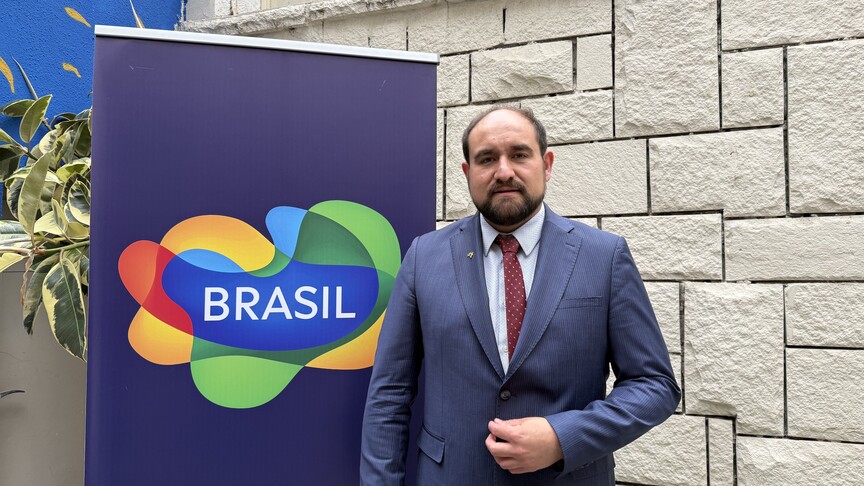
Brazil aims to share its experience in combating deforestation and restoring degraded land with Türkiye at the UN climate summit COP31, to be held in Antalya from Nov. 9-20, according to Brazil's agricultural attache to Türkiye.
Speaking to Anadolu, Diego Leonardo Rodrigues said climate change is affecting agriculture everywhere, including in Brazil and Türkiye, and that as temperatures rise, the agricultural sector is being forced to confront the consequences.
He noted that Brazil is particularly vulnerable to climate events because agriculture accounts for approximately half of the country's exports. With El Nino expected to intensify in the coming months, he said some crops could see yield reductions of around 5 to 10%, requiring Brazil to shift its production areas, moving toward regions that use less water and rescale certain crops.
Satellite-based deforestation monitoring experience to be shared at COP31
Rodrigues said Brazil has developed a strong satellite-based system over the past five years to monitor changes in its forests, with a particular focus on controlling illegal deforestation.
"You can't simply claim you are controlling deforestation, you have to monitor it, and Brazil does this as open data. You can go online and find the figures, both for the years when we didn't do well and the years when we did well on deforestation.
Anyone in the world has been able to follow this for years now, because we made the data public. We believe this brings transparency, so everyone knows what is happening in the Amazon and in Brazil's other biomes," he said.
He noted that Brazil reached record funding for forest restoration this year, with resources directed at keeping indigenous peoples and forest communities in place.
"They were there before Brazil even existed, they are still there, and they are in a sense its guardians," he said.
Rodrigues added that Türkiye has a strong reforestation base for keeping carbon low, but artificial reforestation replacing primary forests can create biodiversity problems -- an issue expected to be addressed at COP31.
Cooperation opportunity on degraded land
Rodrigues described restoring degraded land as the area with the greatest potential for cooperation between Brazil and Türkiye in environmental protection and agriculture.
"This has been a great opportunity to share Brazil's and Türkiye's experiences. Brazil has extensive areas of degraded land, and all or part of it can be recovered. Türkiye also has a high level of land degradation, the sinkholes we have seen in the international media are really a symptom of that degradation in Türkiye.
Both countries share the same problems. This program on degraded land is where we currently see the most potential for cooperation between Brazil and Türkiye in the environment and agriculture," he said.
He said Brazil has developed financing mechanisms for restoring degraded land, including low-interest loans for farmers who adopt sustainable practices and comply with environmental regulations.
He also highlighted policies that encourage the reuse of agricultural organic waste and biofertilizers on farms, noting that these programs contribute to fixing carbon back into the soil.
Rodrigues pointed to Brazil's Caminho Verde (Green Way) program, which aims to recover up to 40 million hectares of degraded land over the next 10 years, converting them into high-yield arable land while enhancing the productivity and sustainability of agriculture and livestock.
COP31 will be a COP where implementation comes first
Rodrigues underlined the importance of building consensus across differing national circumstances.
"It is important to understand that dealing with such a complex problem means dealing with the diversity of opinions among different countries. You can't find a perfect solution in one or two countries -- you need consensus," he said.
"Brazil started the movement, and Türkiye will continue it. This will be a continuation of a COP where implementation comes first. Negotiations are still important, but making good use of the money the COP brings for the environment, and above all for tackling climate change, and showing everyone with data and credibility that the money is there and being put into very positive and effective programs, is what matters," he concluded.