Serdar Dincel
22 September 2026•Update: 22 September 2026
- 7,288 candidacies have been registered nationwide, official data shows
- Main parliamentary forces are broadly divided between parties forming current government coalition and those in opposition
Morocco heads to the polls on Wednesday for a parliamentary election that will determine the makeup of the country’s 395-seat House of Representatives and shape the next government under King Mohammed VI.
Some 15.8 million registered voters are eligible to cast ballots in the North African kingdom, where political parties compete for control of parliament but the monarch retains significant powers over the state’s most important political and strategic decisions.
The vote will be Morocco’s sixth legislative election since Mohammed VI took the throne in 1999, and the fourth since constitutional reforms introduced after the 2011 Arab Spring expanded the powers of parliament and the prime minister while preserving the king’s central role.
Here is a look at Morocco’s political system, the main parties competing in the election, the groups boycotting the vote and how Moroccans living abroad can cast their ballots.
How does the election work?
Twenty-eight political parties are vying for 395 seats in the House of Representatives.
A total of 7,288 candidacies have been registered nationwide, averaging more than 18 candidates per seat.
Since Morocco is divided into local electoral constituencies, 305 seats are elected locally and 90 others are elected through regional constituencies.
The Authenticity and Modernity Party (PAM), Istiqlal Party, Party of Progress and Socialism and Justice and Development Party each submitted 92 local lists, covering all 92 local constituencies, with 305 candidates each.
The National Rally of Independents (RNI) also submitted 92 local lists with 305 candidates, while other parties submitted fewer lists
Who are the main parties?
The main parliamentary forces are broadly divided between the parties forming the current government coalition and those in opposition.
The coalition consists of the National Rally of Independents, the Authenticity and Modernity Party, and the Istiqlal Party.
RNI, the largest party in the 2021 election, is seeking to maintain its position, while PAM is aiming to emerge as the leading party and head the government for the first time. Istiqlal is also seeking to expand its influence after joining the coalition in 2021.
The main opposition parties include the Socialist Union of Popular Forces, the Party of Progress and Socialism, the Popular Movement and the Justice and Development Party, which are seeking to increase their representation in parliament.
The election will determine the composition of the House and, under Morocco’s constitutional system, the party that emerges with the largest number of seats will be called upon to form the government.
Who is boycotting the election?
Not all political groups are taking part.
The Justice and Charity Association, Morocco’s largest religious movement, and the Democratic Labour Way Party, a left-wing group, are boycotting the election.
Both have criticized the political environment and argued that the conditions do not allow for what they consider free and fair political competition.
Can Moroccans living abroad vote?
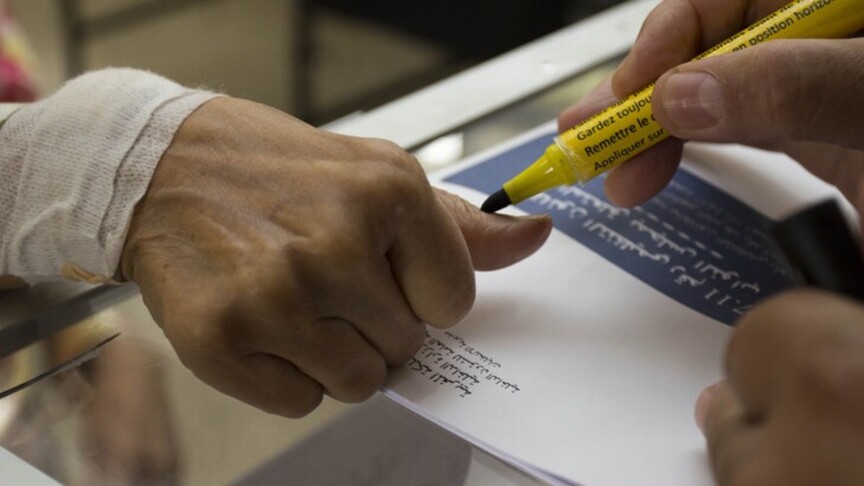
The Interior Ministry has launched an online platform allowing Moroccans living abroad who are registered on the electoral rolls to arrange voting by proxy.
Under Moroccan law, eligible voters abroad can appoint a voter registered in Morocco to cast a ballot on their behalf.
The electronic platform allows them to complete the proxy procedure before election day.
Who oversees voting?
Morocco’s Central Election Monitoring Commission, supported by regional and provincial committees, oversees the electoral process.
A total of 3,006 accredited observers, including representatives of 20 international and regional organizations, will monitor the legislative elections on Sept. 23.
Independent and impartial election observation has been regulated by law since 2011.
Observers monitor the process independently and cannot intervene in electoral operations, while state monitoring committees can take action over violations.