- 'Withdrawal of coalition forces will impact KRG security more than the end of the aid, at least in the immediate term': Paul Iddon, Erbil-based journalist specializing in Mideast affairs, history and politics
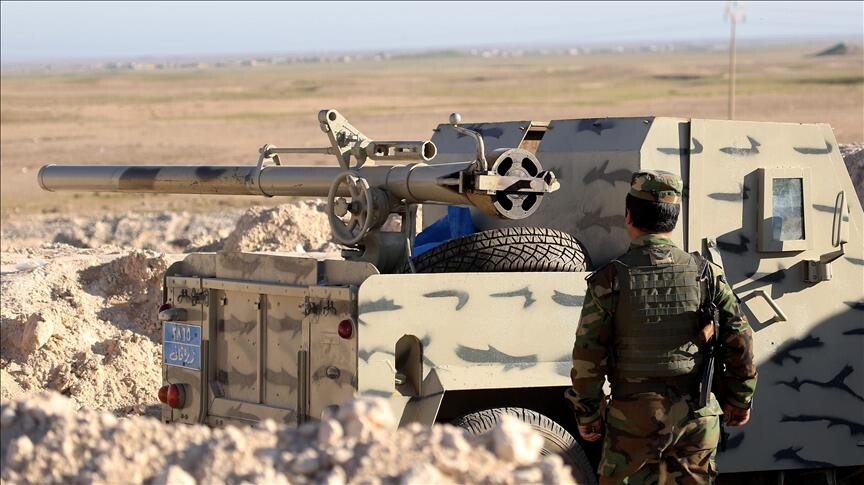
Experts say the potential end of US financial assistance to Peshmerga forces in northern Iraq’s Kurdish Regional Government (KRG) would raise concerns in the KRG leadership, but could also represent another “transitional phase” in US-KRG relations, with the sides potentially in the future operating under a new security framework.
According to reports by the BBC and local media in the KRG, US support, including up to $61 million in annual financial assistance to Peshmerga forces, is expected to end on Sept. 30.
The reported date for the potential end of assistance also coincides with the expected conclusion of the mission in Iraq of the US-led Global Coalition Against ISIS (Daesh).
Experts who spoke to Anadolu said the potential end of aid could affect both the security of the KRG, which has been targeted by numerous drone and missile attacks this year during the US/Israel-Iran war, as well as relations between Washington and Erbil, the KRG regional capital.
‘Would make KRG more vulnerable to attacks’
Omar Al-Nidawi, a senior fellow at the Atlantic Council, said the possible end of US assistance to the Peshmerga would likely increase concerns in Erbil about Washington’s direction as an ally.
As an example, Al-Nidawi pointed to what Iraqi Kurdish leaders viewed as developments during 2025-2026 conflicts in which the US appeared to abandon Syrian Kurds in favor of strengthening Syria’s post-Assad central government.
He said the most urgent security concern for Iraqi Kurds is acquiring air defense capabilities that could protect the KRG against drone and missile attacks by Iran and allied militias.
"Combined with the loss of US systems as the US pulls its last remaining troops, ending the aid program would make the KRG more vulnerable to attacks," he said.
Al-Nidawi also said the KRG could face growing pressure to meet Iranian demands on issues such as the presence of Kurdish opposition groups in the region.
Aid assistance 'was never a long-term setup'
Hamzeh Hadad, a fellow with the Middle East Security Program at the Washington-based Center for a New American Security (CNAS), said he did not believe relations between the US and the KRG would fundamentally change.
"At the end of the day, the Kurdish parties in Iraq need the US more than the US needs them," he said.
Hadad said US assistance to the Peshmerga had “never been a long-term setup” in terms of security.
The possible end of the aid, he said, could "force the KRG to take security reform more seriously" and require greater coordination with security forces led by Iraq’s central government in Baghdad.
"US presence and support hasn’t prevented attacks from Iran and armed groups in Iraq, (so) with less US involvement then there will be less of an excuse for KRG to be a target," he added.
KRG to become more dependent on Baghdad to finance Peshmerga
Journalist Paul Iddon, who covers the Mideast with a particular focus on the KRG, said the impact of ending assistance to the Peshmerga would not necessarily be negative.
"From the start, this aid was provided under the framework of the anti-ISIS mission that’s now ending and was never going to be permanent, he said.
Iddon said KRG officials had also acknowledged this in recent weeks, noting that the coalition’s combat mission officially ended in December 2021 and so this should not come as a surprise.
"At the same time, the timing is a little worrying for Erbil, which has long struggled to pay most civil servant salaries on time and will become even more dependent on Baghdad to fund these Peshmerga troops employed by the Ministry of Peshmerga Affairs," he added.
Coalition withdrawal may have greater impact on KRG security
"The withdrawal of coalition forces will impact KRG security more than the end of the aid, at least in the immediate term," said Iddon.
American and British air defense systems provided significant practical protection for Erbil against drones and missiles during the continuing US/Israel-Iran war, he said, although most of those systems are now being withdrawn.
Nevertheless, Iddon stressed that the systems “never provided a strategic defense for the KRG,” noting that Peshmerga members were killed in missile strikes during the war and that the residences of KRG leaders were repeatedly targeted by drones.
He also said coalition forces either “could not or did not” defend Erbil against missile attacks carried out by Iran’s Islamic Revolutionary Guard Corps in 2022 and 2024.
"There is a small chance the US withdrawal may see a reduction in Iran and Iraqi militia attacks against the KRG, but I wouldn’t count on it," he added.
"I think after the withdrawal, you will still see US/coalition fighter jets flying from bases outside Iraq occasionally shooting down Iraqi militia and Iranian drones targeting the region; we’ve already seen that in recent months," Iddon said.
New security framework possible between US and KRG
Iddon said the current developments likely represent another “'transitional phase” in US-KRG relations and that the two sides will most likely operate under a new security framework in the future.
"US officials keep pointing to the fact that the largest American consulate was just built here in Erbil as a testament to continued ties. Still, a potential power vacuum in Iraq is worrying for KRG," he said.