
From its inception in the late 19th century, the Zionist movement has promoted the idea that Palestine is “a land without a people.” The ultimate objective is not only to legitimize a Jewish settler-colonial state in Palestine but also to erase the very idea of indigenous Palestinians.
Without ‘Western’ permission and support to construct Jewish settlements and outposts on Palestinian land, Israel would not have been able to establish a ‘colonial’ state in 1948. Building these settlements has displaced the indigenous Palestinian populations. Therefore, there is a fundamental relationship and a direct link between the Zionist colonial project or Israel and the displacement of Palestinians.
The displacement of Palestinians has been a cornerstone of thought and practice in the Israeli colonial mind since the very beginning. The construction and establishment of illegal new Israeli settlements and outposts, together with violence and terror in the West Bank, are not exceptions to this mindset.
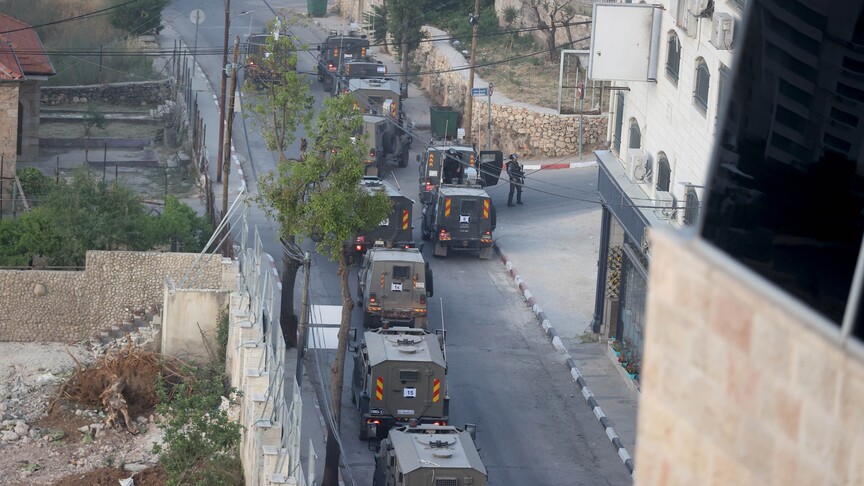
The reality in the West Bank indicates a pattern of integration and complementarity between individual Israeli settler terror and Israeli army and state policy. Israeli settlers attack Palestinians ruthlessly, destroy their herds, and even burn their trees. It is often the case that after the settlers’ assaults and terrorism against Palestinians, the Israeli army continues with extensive punitive measures against Palestinian communities, such as shootings, killings, arrests, sieges, and closures of cities and villages.
Palestinians are convinced that settler terrorism is no longer a marginal phenomenon, but rather an Israeli state policy and a pressure tool intended to weaken and eliminate the presence of the Palestinian people, confiscate their lands, and displace them further to facilitate the expansion of Israeli settlements and overall control.
Why the West Bank?
To Israel, the West Bank is a significant strategic, security, economic, political, and more importantly, religious asset. For instance, Zionist religious and nationalist movements depict the West Bank as “Judea and Samaria,” an essential part of the State of Israel, and argue that this territory is non-negotiable, meaning that under no circumstances are concessions for this land acceptable.
Politically speaking, controlling the West Bank implies preventing the establishment of an independent, sovereign Palestinian state. Therefore, the West Bank is a focal point of Israeli settlements and colonial control.
The West Bank accounts for approximately 21% of historical Palestine, whereas the Gaza Strip constitutes only about 1%. This indicates how significant the West Bank is and where the Israeli focus will shift after destroying almost all the infrastructure and the essentials of living in Gaza.
The West Bank: From indirect control to full Israeli sovereignty
Since Oct. 8, 2023, the Israeli army and settlers have killed more than 1,200 Palestinians in the West Bank, more than 10,000 have been injured, and more than 30,000 have been detained. In the West Bank alone, there are over 800 checkpoints, road gates, roadblocks, and linear obstacles. Israeli policy and the actions of Israeli settlers in the West Bank are clearly intended to make it unlivable and unbearable for Palestinians.
Following Operation Al-Aqsa Flood on Oct. 7, 2023, Israeli policy shifted from indirect control to the imposition of de facto Israeli sovereignty over Palestinian land through multifaceted colonial measures: legal, political, military, economic, and cultural. The implementation of these Israeli policies depends profoundly on furthering terrorism and violence.
Settler terrorism today is highly systematic and comprehensive; it operates alongside the Israeli occupying army. It is entirely backed by the Israeli state, which provides legal and security immunity to those who wish to occupy more Palestinian land. In other words, there are no consequences for Israeli settlers regarding their terrorism and violence against Palestinians.
Full Israeli control over all aspects of Palestinians’ daily lives – through checkpoints, walls, bypass roads, detentions, murder, intimidation, and the destruction of infrastructure – aims to create new enclaves and cantons that isolate Palestinians from their land and surroundings. This drives them into compulsory displacement or unconditional surrender to Israeli colonial conditions and life under an apartheid system.
What is happening in the West Bank nowadays is not merely settlement expansion or random violence and terrorism. Rather, it is an organized settler-colonial project seeking to annex the entire land, eliminate or displace its inhabitants and owners, and institute comprehensive Israeli sovereignty.
Is a new Intifada about to erupt?
The rise of the Israeli extremist right wing, represented by Finance Minister Bezalel Smotrich and the so-called National Security Minister Itamar Ben-Gvir, has significantly increased Israeli terrorism and violence, including in the West Bank. To survive the internal failures, deep social division, and the consequences of the Oct. 7 military failure, the Israeli government, particularly Netanyahu, was forced to keep his coalition with Smotrich and Ben-Gvir intact. Therefore, he gave them both unlimited freedom to advance their radical and extremist ideological agendas in the West Bank and Jerusalem.
The tremendous pressure on Palestinians due to settler and Israeli military terrorism indicates the approaching outbreak of a new intifada. Palestinians are breaking the barrier of fear, and day by day, the number of those willing to confront settlements and settlers is increasing. This is especially true given that the West Bank is experiencing a silent genocide, far removed from the media, and because of what is happening at the international level, such as the war in Ukraine, tensions in Iran and the Gulf, and the likelihood of an international economic crisis.
The violations of basic human rights by Israel and the settlers will not go without consequences. History tells us that the West Bank will not remain quiet forever; it is only a matter of time before the next eruption.
*Opinions expressed in this article are the author's own and do not necessarily reflect the editorial policy of Anadolu.
news_share_descriptionsubscription_contact