13 May 2026•Update: 14 May 2026
- Tom Sauer is a professor in international politics at the University of Antwerp in Belgium and currently a visiting fellow at Meiji Gakuin University in Tokyo, Japan
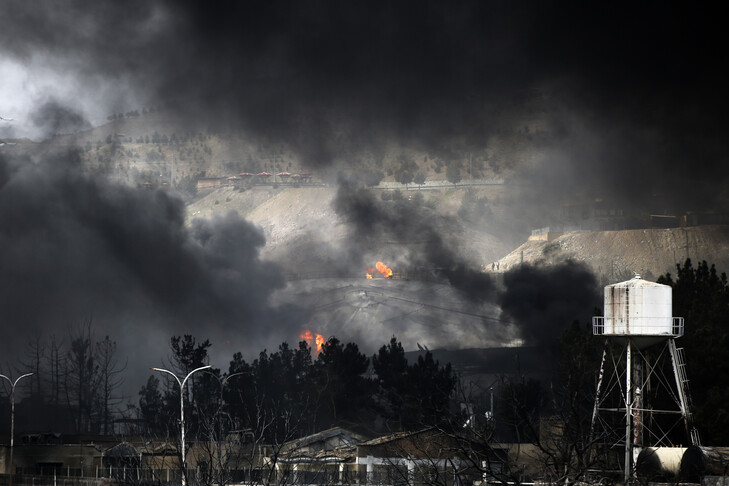
The war in Iran is taking longer than planned for the Trump administration. The whole world feels the pain of higher fuel and energy prices. While US President Donald Trump has not made clear what the exact reason for this war is, the Iranian nuclear program is certainly part of the answer. According to The New York Times, it was Israeli Prime Minister Benjamin Netanyahu who was able to convince President Trump to bomb Iran for the second time within a year.
Double standards in the nuclear arena
How legitimate is it for Israel, which has never signed the Nuclear Non-Proliferation Treaty (NPT) and possesses nuclear weapons itself (although never admitted), to try to prevent another state from acquiring nuclear weapons? From the Israeli point of view, it is clear that it wants to keep a nuclear monopoly in the Middle East. From a regional perspective, this is hardly sustainable. Proliferation begets proliferation. One of the main reasons for Iran to have a nuclear program that may be used for military purposes is the fear of the Israeli atomic bomb. If Iran goes nuclear, the odds are that other states in the Middle East will rush to acquire nuclear weapons as well, starting with Saudi Arabia, which has recently strengthened its relationship with Pakistan, another nuclear-armed state. In the past, Egypt had a nuclear weapons program. Countries like the UAE and Türkiye are acquiring civilian nuclear installations that may later on be used for strategic purposes. The solution is not that Israel keep its nuclear monopoly. The only stable solution is a "weapons of mass destruction-free zone" in the region.
Last week, 30 representatives of the Democratic Party in Congress wrote a letter to President Trump asking him to at least publicly admit the fact that Israel possesses nuclear weapons. Since Israel acquired nuclear weapons at the end of the 1960s, each US administration has refused to say openly that Israel possesses nuclear weapons. That opaque policy makes Israeli life much easier. If the US stated openly that Israel has nuclear weapons itself, it would become difficult for Israel to deny it and less legitimate for Tel Aviv to launch wars to prevent other states in the Middle East from acquiring nuclear weapons.
Breaking the silence on Israeli nuclear arsenal
The letter of the US representatives is a precedent. Never before has the political establishment in the US questioned the Israeli nuclear arsenal in such terms. The letter demands that the administration come up with a risk assessment for the US troops involved in the war in case Israel uses nuclear weapons. The letter also makes clear that the US war against Iran is perceived as less legitimate in the world because Israel is involved.
The general attitude in the US, which has become much more negative vis-à-vis Israel than in the past because of the genocidal bombing of Gaza by Israel, made it easier to write this letter. Already in April, 40 Democratic representatives voted in favor of a law not to deliver bulldozers to Israel.
Another reason for this letter may be that Congress feels neglected in this war. The Trump administration started the war without approval from Congress. While the administration is required to get such an approval after 60 days, the Trump administration did not act, arguing that the war came to a halt because of the ceasefire.
Lastly, is it by chance that the letter was written when, at the same time in New York, the five-yearly review conference of the NPT is taking place, a treaty that has been signed by almost all states in the world, except Israel (and India and Pakistan)? How can we prevent nuclear proliferation in the Middle East if the only state with nuclear weapons in the region is not even recognized as such by the US?
*Opinions expressed in this article are the author's own and do not necessarily reflect the editorial policy of Anadolu.