Mehmet Sah Yilmaz, Elif Gultekin Karahacioglu, Yasin Yorganci, Ahmet Furkan Mercan and Fatma Zehra Solmaz
07 July 2026•Update: 07 July 2026
- 'The key urgent point of the summit is European self-reliance,' says academic
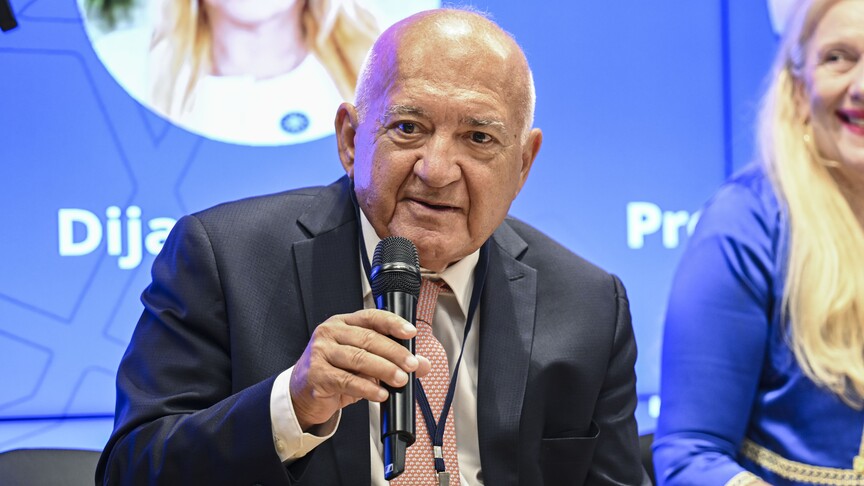
Bosnia and Herzegovina needs stronger NATO-backed investment and development initiatives alongside continued security support, experts said Tuesday at a panel on the Balkans' Euro-Atlantic integration held as part of the NATO Summit Dialogues.
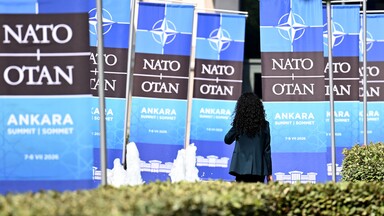
Hosted by the Turkish Atlantic Council and the Center for Foreign Policy and Security Research at the Turkish Industry and Business Association (TUSIAD) in Ankara, the panel focused on the Balkans' Euro-Atlantic integration and regional tensions.
Moderated by former Turkish Ambassador Hakan Okcal, the panel featured Dijana Gupta, president of the Bosnia and Herzegovina Atlantic Council and a professor at the University of Mostar, Edward P. Joseph of the Johns Hopkins School of Advanced International Studies, and former Bulgarian Ambassador to the US Elena Poptodorova.
Gupta highlighted the importance of NATO and the European Union's support for Bosnia and Herzegovina, saying security, peace, economic development, and investment are critical for the country.
She said Bosnia and Herzegovina has received support to produce modern weapons with the arrival of US and NATO headquarters and through the assistance of countries including Türkiye, France, and Germany, but stressed that the country still needs more NATO-backed projects.
"I think the most important goal for us, after building a bigger NATO, would be to organize an investment seminar for Bosnia and Herzegovina," Gupta said.
Key urgent point of summit is 'European self-reliance'
Joseph said NATO leaders discussed defense industrial production in relation to the Balkans, saying the summit's key message is "European self-reliance."
"The key message now, the key urgent point of the summit is 'self-reliance,' European self-reliance," he said, arguing that Europe is taking on a greater share of the defense burden amid the Russian threat, which he said "threatens the common, and in my view, threatens the United States as well."
Joseph argued that self-sufficiency is not a realistic concept for the Balkans. While Europe claims it can achieve strategic autonomy, Balkan countries remain dependent on the United States, he said.
He also stressed that Balkan countries are not on an equal footing, noting that Serbia's population alone exceeds that of several neighboring countries combined.
He said this imbalance is the main reason the region's longstanding problems remain unresolved.
He said Serbia is not the only source of tensions in the Balkans but stressed that, unlike Belgrade, "every single one" of the region's other countries is committed to joining NATO.
Diverging views on the Balkans within US administration
Poptodorova said that, having attended previous NATO summits, she considered this year's gathering to be one of the most difficult.
She said the uncertainty stems from the inability to determine whether the administration of Donald Trump is acting in good faith to rebalance NATO and establish what has been described as "NATO 3.0," or whether it intends to withdraw entirely from Europe's security architecture.
"We know there are two different schools of thought within President Trump's administration. One wants this to continue, while the other wants the United States to withdraw," she said.
Poptodorova added that although discussions have centered on the Balkans, what is now commonly referred to as Southeast Europe or the Western Balkans has not received sufficient attention.
Nevertheless, she said, US engagement with the region continues to be driven by its strategic interests.