Michael Gabriel Hernandez
18 June 2026•Update: 18 June 2026
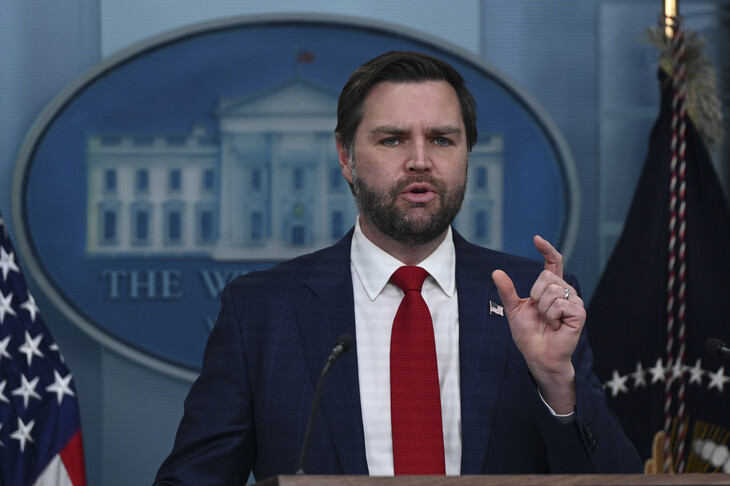
Vice President JD Vance said Thursday that the US and Iran are honoring their commitments under the just-signed memorandum of understanding.
"The Iranians, for the second night in a row, did not shoot at any ships in the Strait of Hormuz, so, so far they are honoring their end of the commitment, and on the blockade, CENTCOM has allowed north of a dozen ships to go through our naval blockade, and so we're also honoring our end of the early part of the agreement," Vance said at the White House.
Late Wednesday, 12.5 million barrels of oil were able to transit through the Strait of Hormuz, said Vance. Iran had retaliated against the US-Israeli war, in part, by shuttering the waterway, which is critical to global energy supplies.
Vance rebuffed criticism of the agreement from those who are suggesting Iran receives the benefits of the deal without first changing "their behavior."
"The idea that they get benefits before they change their behavior is fundamentally a talking point that is issued by people who want the conflict to continue indefinitely, despite the fact that that's not good for the American people, and it's not good for the region," he said.
He did not immediately identify whom the criticism was coming from, but later made a point to rebuff public comments from Israeli officials who have come out strongly against the agreement.
"Over the last three months, two-thirds of the defensive weapons that have protected your homeland have been built by American hands and paid for by American tax dollars. The problem for Israel is not Donald J. Trump, and anybody in Israel who thinks their biggest problem is the President of the United States needs to wake up and smell the reality of the situation that country is in," he said.
Vance said he expects to depart for additional talks with Iran in Switzerland as soon as this weekend, but said the timeline is not certain to due to difficulties in leaving Iran.
"Our plan is to go to Switzerland. I don't know exactly when. The way that we're setting up this technical negotiation is that obviously you're going to have the political leadership involved. We're going to have people on the ground, actually driving the technical talks, the nuclear talks," he said.
"I plan to go to Switzerland. Exactly when, you know, we think these technical negotiations are going to start sometime this weekend. That's still the plan, but that could change because it's not an easy country, Iran, to get out of," he added.
Trump, Iranian President Masoud Pezeshkian, and Pakistani Prime Minister Shehbaz Sharif, acting as a mediator, signed the agreement Wednesday.
Under the terms of the deal, Iran will immediately reopen the vital Strait of Hormuz, while the US will lift its naval blockade, according to the Pakistani leader.
Soon after the US and Israel initiated the war on Feb. 28, Iran closed Hormuz, and American forces later imposed a blockade on Iranian ports -- making the passage of commercial ships through the critical waterway nearly impossible.