BERLIN
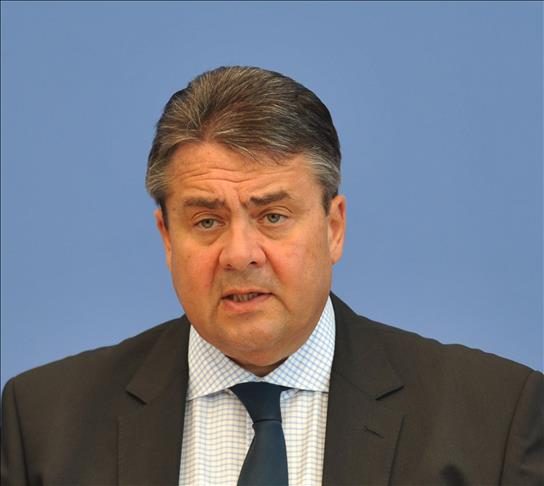
German Vice Chancellor and Economy Minister Sigmar Gabriel has defended his controversial visit to Tehran, which took place a few days after the nuclear deal was reached on July 14.
Gabriel was the first high-ranking Western politician to visit Iran after the deal -- in a three-day trip, during which he was accompanied by a high-level business delegation, which included the executives of largest German companies, including technology giant Siemens and chemical producer BASF.
“I believe that we have acted in a correct way by showing the country that engaging in peaceful solution of the nuclear conflict will be worth it. Because there are still some in Iran who are against the solution of this conflict,” Gabriel said Thursday at a press conference in Berlin.
Gabriel rejected criticisms from opposition parties on Thursday and said that developing further contacts was important to facilitate peaceful solution to conflicts.
“Contacts instead of conflicts. I believe that makes sense,” he said. “It wouldn’t have been a clever message if we had told Iranians that, even if they engaged in a peaceful solution of the conflict, we were not ready to hold economic contacts with them.”
Gabriel also said that other Western countries, including France and Italy, were also sending high-level delegations to Tehran next week.
“As the economic minister of Germany, my job is to help my country and its economy,” he stressed.
Western sanctions against Iran had effectively restricted trade of German firms with Iran in the past, and exports remained at 2.4 billion euros ($2.6 billion) in 2014.
The German Chamber of Commerce and Industry, or DIHK, is aiming that they reach the 10 billion euro ($11 billion) level in three or four years. The two countries agreed to hold a joint economic commission meeting in the coming months.
Germany’s opposition parties have sharply criticized the government for adopting an overly hasty approach in boosting political and economic ties with Iran.
“The current regime of Iran can neither be a friend nor a strategic partner of Germany, due to its approach towards Israel and due to its human rights record,” opposition Green Party lawmaker Volker Beck told German news agency DPA on Thursday.
He accused the Iranian regime of grave human rights violations and of supporting terrorist groups in the Middle East.
Opposition Left Party lawmaker Jan van Aken said that after the nuclear deal, the German government’s priority should have been the human rights situation and repression of the opposition in Iran.
“But the government’s deliberate choice of sending first the economy minister to Tehran makes us think that this won’t be the case,” he told daily Taz.