18 February 2016•Update: 19 February 2016
By Halima Athumani
KAMPALA, Uganda
Vote counting has begun in Uganda after an election marred by delays led to chaotic scenes, extensions and arrests.
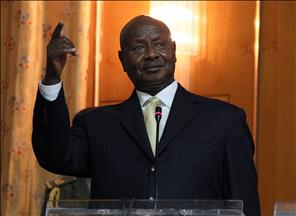
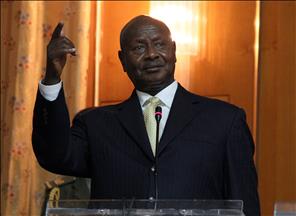
Ugandans voted in an election Thursday that pitted Ugandan President Yoweri Museveni, who has been in power for the last 30 years, against seven other candidates.
Addressing journalists Thursday evening, Electoral Commission Chairman Badru Kiggundu announced that due to delays polling in 36 locations in the Ugandan capital of Kampala and Wakiso districts would be held Friday starting from 7 a.m. till 4 p.m.
Election results are expected to be released Saturday evening.
About the delay, he explained: “We did not have enough vehicles to transport the materials to different polling stations that’s why there was a delay”.
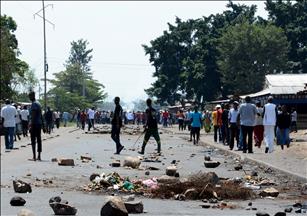
The vote delay saw some polling stations open as late as 4 p.m., which led to chaotic scenes and even confrontations between voters and the police.
“These delays will not discourage us from voting; we shall vote even if it means standing here till midnight,” one female voter was heard shouting outside a polling station in Kampala.
Commonwealth Observer Group chairperson, Olusegun Obasanjo, who is also ex-Nigerian president, told media in Kampala’s Makindye division: "A delay of an hour or two is excusable…delays of three, four, five and even six hours, especially in Kampala, are absolutely inexcusable and will not inspire trust and confidence in the system and the process."
Police also arrested close to 80 people around the country over claims of voter bribery, intimidation and distribution of cash and other goods such as salt, sugar and flour.
Meanwhile, Ugandans continued to face restrictions on social media, including Facebook, WhatsApp, Twitter and other mobile services.
Uganda's communications commission said in a statement late afternoon: “The move was meant to check irresponsible use of social media; it is difficult to control content, as soon as everything normalizes, we shall reinstate them.”
About the social media restrictions, Obasanjo said: "It is ill advised if anyone has blocked social media. I have spoken to the Electoral Commission and they said they did not know anything about it."
However, while casting his vote in Rwakitura in western Uganda late afternoon, incumbent President Museveni explained that social media was taken down on the pretext of a temporary security measure because some people allegedly used the platform as a "way to tell lies".
"That must be steps taken for security to stop so many social media users from getting in trouble; it’s temporary, it will go away because some people misuse those pathways for telling lies," local media quoted Museveni as saying.
Mobile Telecommunication Network, Uganda’s leading Internet provider, confirmed that it had been ordered to take down the Internet applications and it also disabled its mobile money transaction platform.