Anadolu Ajansı © 2026


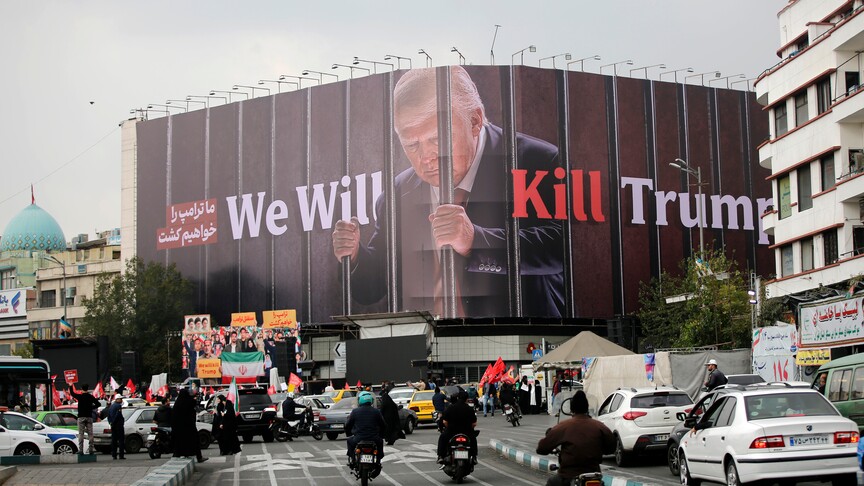
Iran thinks it is winning the war because its pressure on energy prices in the United States hit US President Donald Trump hard politically. At the same time, US Adm. Brad Cooper, who is leading the military campaign against Iran, says more oil is passing through the Strait of Hormuz on top of an American blockade that cripples Iranian commerce, and thus Washington is winning. Both are right, and the conflict seems likely to escalate again, influencing the global balance of power.
More than six months after President Trump announced a naval blockade of Iran, Tehran successfully gambled that it could manage growing damage to the Iranian economy and inflict heavy financial – and political – costs on the United States. The Iranian public has not risen in revolt despite the sharp fall in the value of the Iranian rial, the surge in inflation, and the slow pace of reconstruction from heavy bombings earlier this year. Not all is good news for Iran, however. The American blockade of Iranian ports has halted Iranian oil exports and slashed foreign currency payments. Moreover, the American Navy has developed an escort system that has enabled oil flows through Hormuz to recover to approximately two-thirds of pre-war levels. In addition, Saudi Arabia and Iraq are using land routes to move more oil too. In response, Iran has increased its attacks on commercial shipping near the Strait of Hormuz. A New York Times writer on Nov. 17 quoted an Emirati official who said more accurate Iranian missiles and drones now regularly cripple Emirati ships. The intensified attacks have sharply raised insurance costs in the Gulf. Compared to the early days of the war last March, more ships are moving, but, driven by higher shipping costs, the price of oil stubbornly remains about 40% above the price before the war began on Feb. 28.
The Iranian public may be suffering, but so is the American public. An analysis from Moody’s in October concluded higher oil prices have cost the average American family about $2,000 this year. In the Nov. 3 election, American voters overturned Trump’s Republican Party majority in Congress, giving the Democratic Party strong majorities when the new Congress meets next January. The Democrats will launch investigations into the corruption of the Trump administration and move to remove some of Trump’s Cabinet secretaries, including Defense Secretary Pete Hegseth. Trump will have to spend more time defending himself on the domestic political stage. In addition, the incoming Congress will reject big new military budgets even as the US Navy strains to help shipping in Hormuz; a Democratic move to halt funding for the war against Iran is certain. Without a sure way to compel Iran to make concessions on Hormuz and its nuclear program, Trump seems ready to let the blockade erode Iran’s economy further. The Iranians have warned that they will not accept the blockade as the new normal in the Gulf, and they may conclude that new escalation from their side first is necessary. They have threatened to attack Gulf Arab states’ energy facilities and infrastructure to further pressure the Americans to retreat, confident the Democratic Party will not back Trump if the president launches a massive response against Iran.
Even as Trump stumbles, the war is expanding. Iran did not control the timing of Houthi intervention against Saudi Arabia, but Houthi success in striking Saudi energy facilities impeded Trump’s efforts to bring down world energy prices. The Saudi government had to cancel a major annual investment conference, in part because the Riyadh airport had been closed due to repeated Houthi attacks. Trump, wary of falling deeper into Middle Eastern conflicts, rejected directly intervening against the Houthis. The British government, however, announced on Oct. 20 that it was deploying warplanes to help defend Saudi airspace, and French President Macron in September said France would send forces to help defend the Red Sea energy port at Yanbu. The Turkish, Saudi, and Pakistani foreign and defense ministers on Oct. 5 in Riyadh unveiled a plan for a rapid Turkish and Pakistani military deployment into the Saudi kingdom. On Oct. 20, the Turkish government submitted the Mecca mutual defense agreement to the Turkish parliament, which ratified the treaty on Nov. 5, paving the way for significant Turkish military assistance to the Saudis. Such a deployment of significant Turkish forces to Saudi Arabia will be unprecedented. Meanwhile, Egypt’s President Abdel Fattah al-Sisi pledged on Oct. 18 that Egypt would also come to Riyadh’s defense.
At the same time, the third member of the Mecca Agreement, Pakistan, closed two of its border crossings with Iran to commercial traffic in mid-October. Confronted by the American naval blockade, Iran needs the cross-border trade with its eastern neighbors more than ever. Pakistan is under pressure from the United States, and from Arab Gulf states, to limit Iranian trade across their borders to weaken Iran’s economy further. Pakistani army chief Asim Munir visited Tehran on Oct. 20 for high-level talks focusing on border security and Pakistan’s goals regarding its deployment of new forces into Saudi Arabia following the Oct. 5 meeting in Riyadh. As Türkiye and Pakistan grow more involved in Saudi defense, Iran may find these two countries less appropriate as mediators between Tehran and Washington.
Mediation has been unsuccessful so far. Iran's leadership perceives the war to be a struggle for existence. It will make no concessions on core demands related to cessation of sanctions, unfreezing of up to $100 billion of financial assets frozen in international banks, and recognition of its right to define a new traffic management system for Hormuz. Tehran also needs to demonstrate that it can harm commercial shipping in the Gulf and disrupt world energy supplies to deter future American and Israeli attacks. Its nuclear program is another big issue complicating efforts to reach an agreement between Tehran on one side and Washington and Jerusalem on the other. The absence of any trust between Iran, the United States, and Israel makes reaching an agreement harder still.
Longer term, Tehran wants to kick the Americans out of the Gulf, in part by demonstrating that the Americans cannot defend the Gulf Arab states. Tehran wants to be a key member of a post-American security order in the region that will necessarily involve Iran working with other regional states. Tehran does not welcome the Mecca Agreement military deployments; on Oct. 20 Iranian, Foreign Minister Abbas Araghchi said foreign military deployments to Saudi Arabia complicate efforts to end fighting between Saudi Arabia and the Houthis. Nonetheless, Tehran can compartmentalize disagreements, and in the short term it needs access to trade through Türkiye and Iran’s eastern neighbors, including Pakistan. In this existential war, if Iran’s Islamic Revolutionary Guard Corps judges that it must strike Saudi targets protected by Mecca Agreement forces to establish deterrence against the Americans, it will strike. Precise targeting intelligence from Russia or China could ease the risk to Iran of killing foreign troops in Saudi Arabia.
Russian and Chinese intelligence assistance to Iranian targeting has paid big dividends to Moscow. Trump on Nov. 19 claimed he did not need Russian or Chinese help with Iran, but in October he had suspended American sanctions on Russian oil and refined product exports and dropped threats of new tariffs against countries buying Russian oil products. This major reversal in American policy established after Russia invaded Ukraine came as Trump searched unsuccessfully for ways to reduce world energy prices. In addition, the Trump administration has delayed military assistance to Ukraine to extract concessions from Kyiv that could help Trump secure a ceasefire between Russia and Ukraine. Trump wrote on social media on Oct. 18 that he also aimed, in part, to convince Russia not to give help to Iran amid the war with the United States.
Members of both American political parties, as well as European states, are trying to convince Trump to restore military assistance to Ukraine and reimpose financial pressure against Russia. If they fail, Türkiye and European nations will need to recalculate their own national strategies as a weakened Ukraine next year will face a stronger Russia recharged with new energy export revenues.
And on top of the potential change to the balance of power in the Ukraine war, the continued deployment of substantial American military forces, including aircraft-carrier groups, from Asia to the Persian Gulf and the depletion of American air defense missiles have left China in a stronger military position facing the United States in Asia.
As the war with Iran drags on, American pressure on Iran’s eastern neighbors to shut down trade with and through Iran likely will grow, making the Trans-Caspian corridor (the Middle Corridor) more attractive for trade flows, especially between Central Asia and markets in the West. Two firms specializing in geopolitical risk analysis, the Risk Assessment Group in Almaty, Kazakhstan, and US-based Future Risk, have predicted that Türkiye may benefit from greater government and business interest in developing and using this Middle Corridor. However, that gain to Türkiye will have to be balanced against the challenges from a more powerful Russia and an Islamic Republic in Iran whose new leaders are less risk-averse and will not welcome Turkish support for Iran’s long-time adversary in Saudi Arabia.
*Opinions expressed in this article are the author's own and do not necessarily reflect the editorial policy of Anadolu.
news_share_descriptionsubscription_contact

contact_the_ombudsman
is_there_an_error_in_this_story